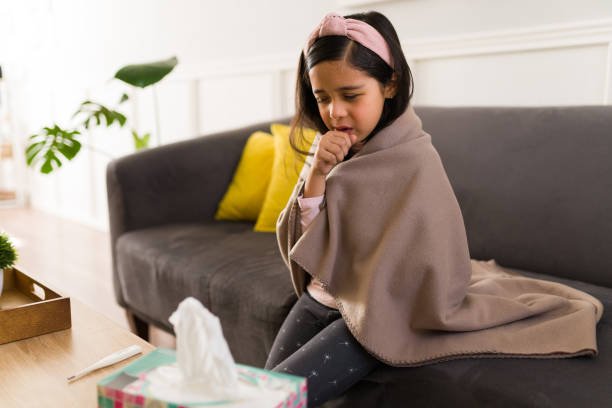
Cough and cold in children are among the most common reasons parents call a pediatrician in winter. Here is what actually helps, what to avoid, and when to worry.
Written by Dr. Vishal Parmar, Pediatrician & Neonatologist (MBBS, DCH, MRCPCH UK, Fellowship in Neonatology) and Chief Medical Officer, NeoKidsPro. Last updated 19 November 2026.
Quick answer
- Most cough and cold in children is caused by viruses, and antibiotics don’t work on viruses.
- Yellow or green mucus does not mean your child needs an antibiotic.
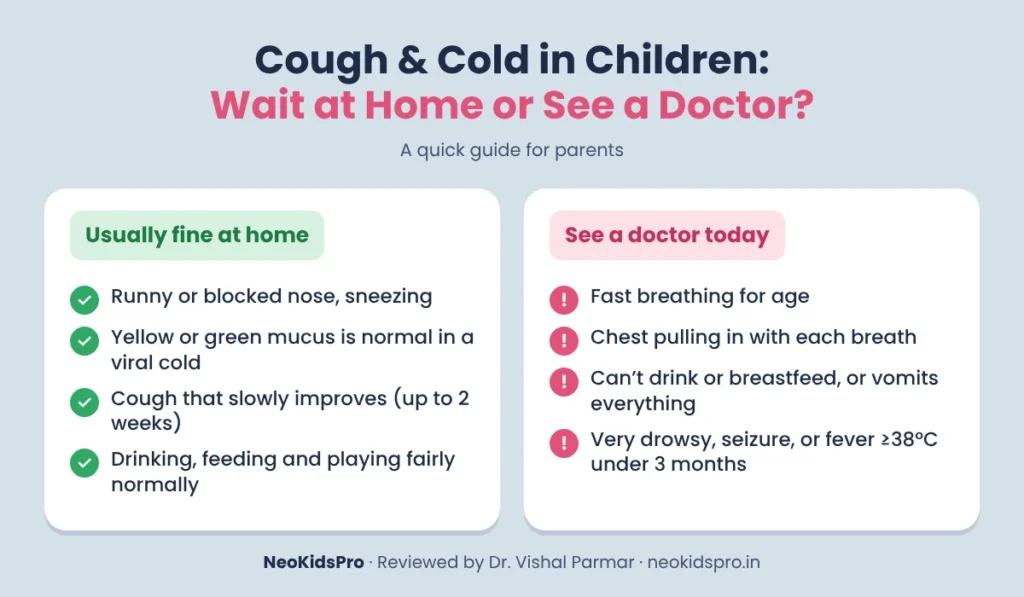
- Fast breathing, chest pulling in, or refusing to feed means see a doctor the same day.
- In India, cough-and-cold syrups containing chlorpheniramine + phenylephrine must not be used under age 4.
Why is cough and cold in children so common in winter?
More than 200 viruses can cause a cold, and catching one doesn’t protect a child from the next. Young children simply meet more viruses, especially once schools reopen and the weather turns. Cough and cold in children usually shows up as a runny nose, sore throat, sneezing and cough, and it can last up to two weeks, according to the CDC.
Does my child need an antibiotic for a cold?
Almost never. Antibiotics kill bacteria, not viruses, so for cough and cold in children they won’t cure the illness, won’t help your child feel better, and can cause side effects.
Thick yellow or green mucus is a normal stage of a viral cold. It doesn’t mean bacteria have taken over (CDC). Antibiotics are needed for some infections, such as strep throat, and sometimes for ear or sinus infections. Only a doctor who has examined your child can tell which is which.
Every unnecessary course also feeds antibiotic resistance, the focus of World AMR Awareness Week (18–24 November).
What helps at home?
For most cases of cough and cold in children, simple home care is enough:
- Fluids and rest. Offer frequent feeds or sips.
- Saline nose drops or a cool-mist humidifier to ease a blocked nose.
- Honey for cough, only from age 1. Never give honey under 1 year.
- No smoke. Keep the home free of cigarette smoke.
- Keep your child home while unwell.
Which cough syrups should I avoid?
Many parents reach for a syrup when they see cough and cold in children, but the CDC advises against over-the-counter cough and cold medicines under age 4 unless a doctor specifically says so, because of serious side effects (CDC).
India has gone further. Regulators first restricted the chlorpheniramine + phenylephrine combination for children under 4. The Health Ministry then extended the warning to all such combination formulations. Check the label, and never give leftover syrup from an older sibling.
Which warning signs mean see a doctor today?
Most cough and cold in children is mild, but seek care promptly if your child has:
- Fast breathing while calm, counted over a full minute: 60 or more breaths per minute under 2 months, 50 or more at 2–11 months, 40 or more at 12–59 months.
- Chest pulling in with each breath.
- Inability to drink or breastfeed, repeated vomiting, unusual drowsiness, or a seizure.
- A harsh noisy sound when breathing in while calm.
- A fever of 38°C (100.4°F) or higher in a baby under 3 months. Call a doctor right away.
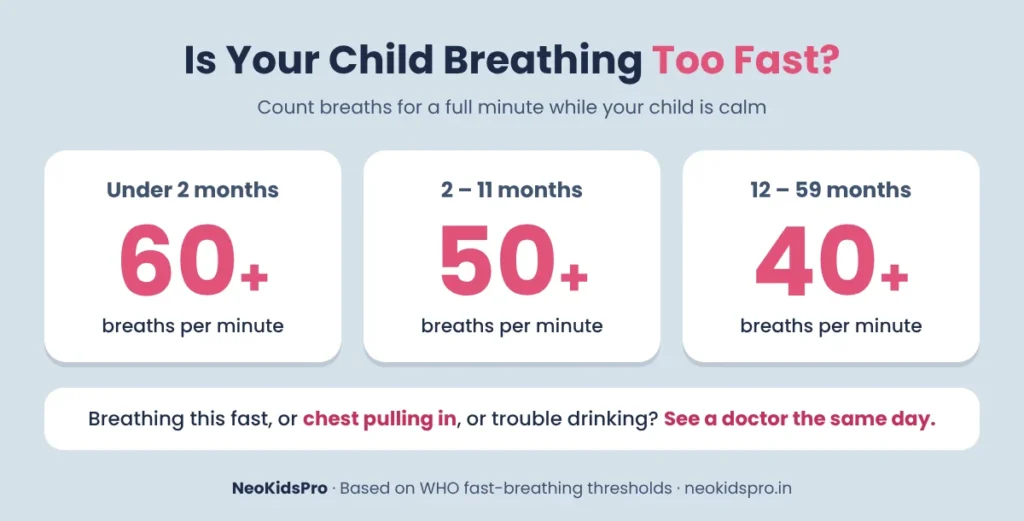
Pneumonia is a leading cause of death in children under 5 worldwide, and fast breathing and chest indrawing are its key signs (WHO). Also see a doctor if a cough lasts beyond two weeks or your child is getting worse instead of better.
How does winter air pollution affect children’s lungs?
Winter smog can make cough and cold in children worse. Children breathe faster than adults, so they take in more pollutants. WHO notes that air pollution damages children’s lung function and can trigger asthma. On high-AQI days:
- Check your local AQI before outdoor play.
- Shift exercise indoors on bad days.
- Avoid burning waste, incense or mosquito coils around children.
If your child coughs or wheezes every time the air turns bad, ask about asthma.
When should you video-consult a pediatrician?
If cough and cold in children keeps returning, or you are unsure how serious it is, a video consultation can help. Consider booking when:
- A cold lasts beyond 10–14 days or keeps returning.
- Night-time cough or wheeze disturbs sleep.
- You’re unsure whether a symptom is serious.
- You want to know what is safe to give your child.
NeoKidsPro pediatricians can assess this by video across India. Book an online pediatric consultation, try the free Child Wellness Scan, or read our vaccination guide for flu vaccine timing.
Frequently asked questions
How long does cough and cold in children last?
Up to about two weeks. See a doctor if it’s getting worse or isn’t improving.
Is green mucus a sign of infection needing antibiotics?
No. Mucus changes colour during a normal viral cold.
Can I give honey to my baby?
Not under 1 year. From 1 year, it can ease cough.
Are cough syrups safe for toddlers?
Avoid them under 4 unless a doctor advises. Certain combination syrups are restricted in India for this age.
Is it pneumonia?
Fast breathing or chest indrawing needs same-day medical assessment.
Sources
- CDC: Preventing and treating the common cold
- CDC: Are antibiotics needed for my child’s runny nose?
- CDC: Common cold fact sheet
- WHO: Pneumonia in children
- WHO: Children and air pollution
- WHO: World AMR Awareness Week 2026
- Breathing-rate thresholds table (PMC)
- Medical Dialogues: DCGI ban on the FDC for under-4s
- The South First: Centre extends the restriction
This article is for general information and does not replace advice from your child’s doctor.